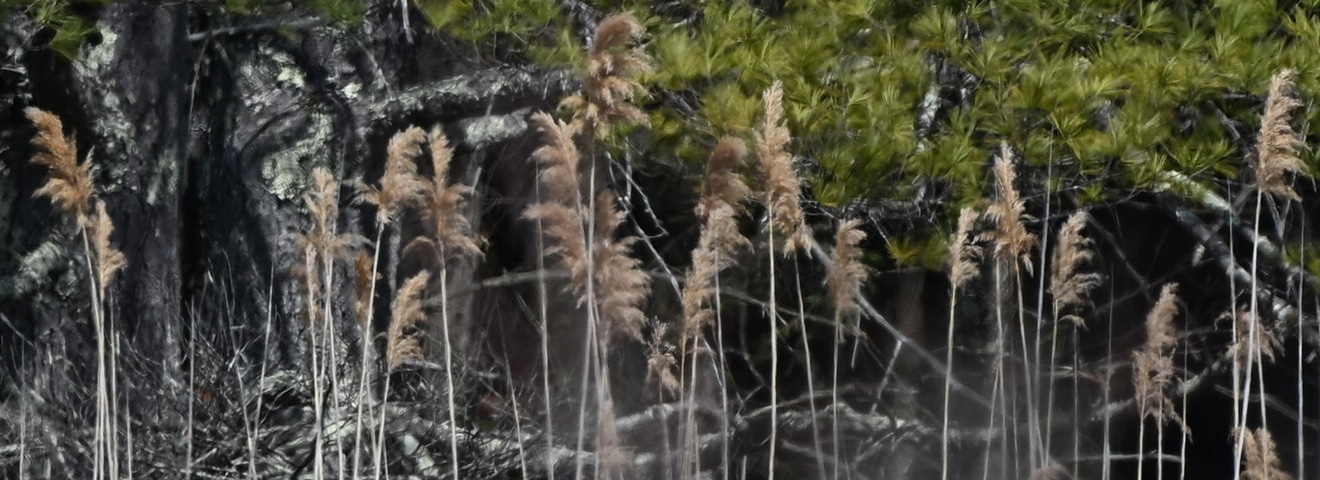
Multitudes of invasive plants are filling our fields, woods and roadsides, choking out natives and offering little or no benefit to wildlife. No one management strategy works for all of them; each has its own biology, growth habits and survival strategies that need to be taken into account in order to effectively control its spread. The Norfolk Conservation Commission has compiled this alphabetical list of invasive species found in Norfolk along with links to fact sheets and videos that explain the best practices for managing them.
See more invasive plant Resources at the bottom of this page. To see the Conservation Commission’s companion page on native plants and their benefits, click here.
Bradford Pear
Pyrus callery
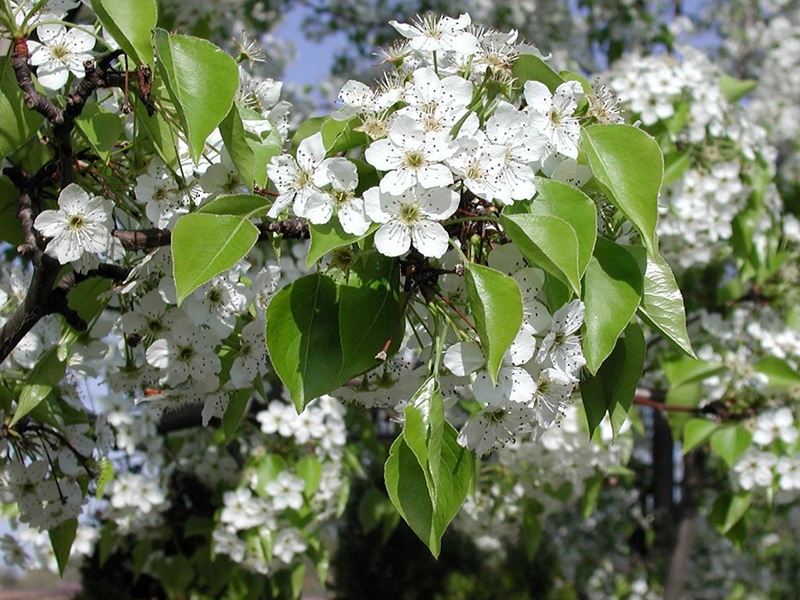
Callery or Bradford pear (Pyrus callery) is a small deciduous tree noted for its early white blossoms, fall color and offensive odor. It remains popular as an ornamental, but will be banned for sale in late 2027. Highly invasive, it quickly dominates old fields. It can also be found along roadsides and forest edges where it displaces native species. For help identifying it, watch this video. For more information, click here.
You can see this plant growing several places in town.
Buckthorn
Rhamnus cathartica, Frangula alnus
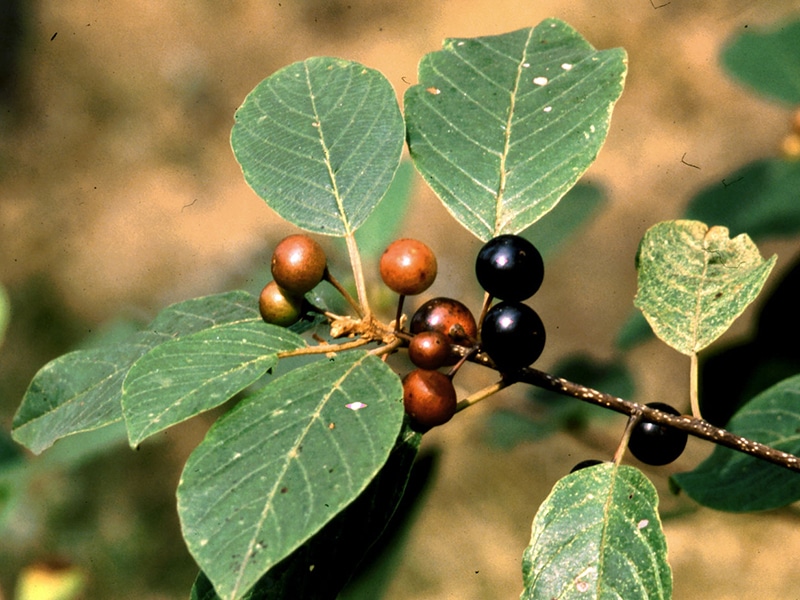
There are actually two species of buckthorn invading our yards and woodlands—common (Rhamnus cathartica) and glossy (Frangula alnus). Both become large shrubs or trees which are the first to leaf out in the spring and the last to retain green leaves in the fall. Berries ripen to black in August and September. Birds and other wildlife disperse the seeds. As a result, buckthorn forms dense thickets, crowding out native plants and significantly degrading wildlife habitat. For Minnesota’s Department of Natural Resources excellent short guide to identifying and controlling buckthorn, click here.
You can see this plant growing all over town.
Burning Bush
Euonymus alatus
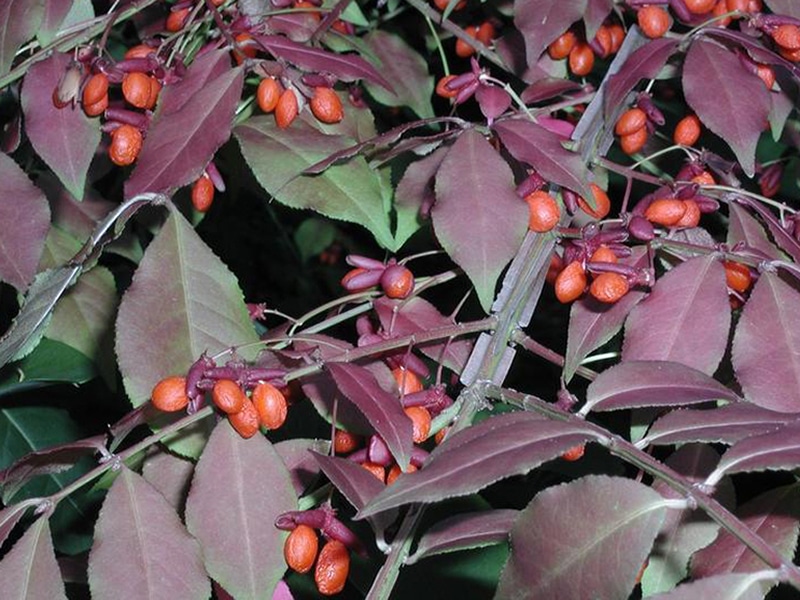
Burning bush (Euonymus alatus) is easy to identify by its winged branches. It has red berries that birds disperse widely and its leaves turn bright pink or red in the fall. It spreads rapidly, even in the shade, choking out native undergrowth and creating a monoculture. For management recommendations by the U.S. Natural Resources Conservation Service, click here.
You can see this plant growing in Norfolk on the southern end of Old Goshen Road.
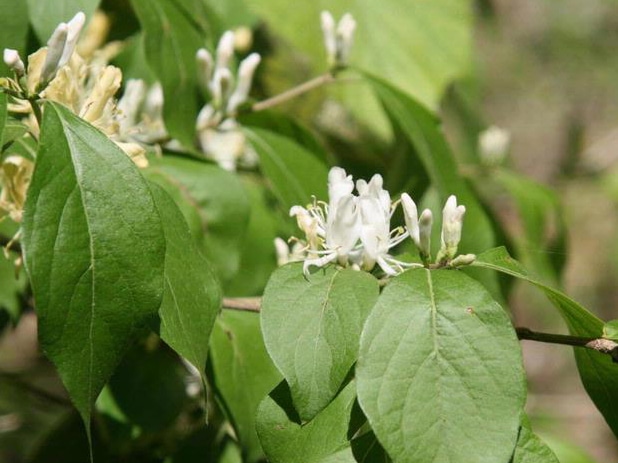
Bush Honeysuckles
Lonicera morrowii, L. maackii, L. tatarica
Invasive honeysuckle refers to non-native species of Lonicera that outcompete native plants and alter woodland ecosystems. These woody shrubs, often called bush honeysuckles, include Morrow’s honeysuckle (Lonicera morrowii), Amur honeysuckle (Lonicera maackii) and Tatarian honeysuckle (Lonicera tatarica). All leaf out early and form creamy pale yellow or pink flowers in May and June. These develop into red berries that are dispersed by birds and mammals. Its rapid spread is all too apparent in the late fall when its yellow leaves are last to drop. For information on control, click here.
You can see thickets of honeysuckles along both sides of North St just past Roughland Road.
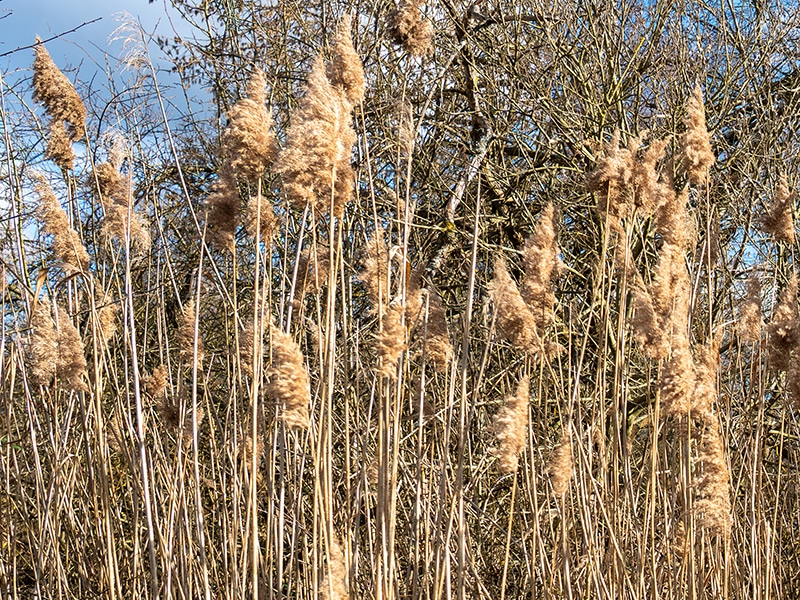
Common reed
Phragmites australis
Common reed (Phragmites australis) is an aggressive perennial grass that can reach heights of up to 15 feet and thrives in wet environments such as wetlands, pond edges, riverbanks, and roadside ditches. Large feathery flower spikes appear in August and persist through winter. The plant spreads rapidly through lateral growth of thick rhizomes and wind-dispersed seeds, and it can also regenerate from stem and root fragments. Dense stands crowd out native species and create barriers for many animals. Distinguishing nonnative from native Phragmites can be challenging. For guidance, click here. Managing this species requires an integrated approach; click here for an outline of recommended strategies.
Rapidly expanding invasions have appeared along Winchester and Grantville Roads.
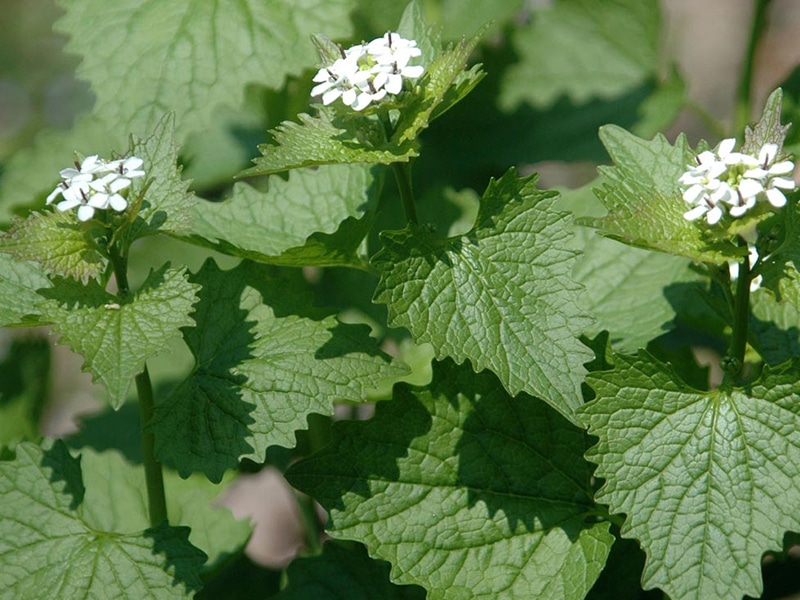
Garlic Mustard
Alliaria petiolata
Garlic mustard (Alliaria petiolata) is a biennial herb with heart-shaped leaves of varying sizes that smell like garlic when crushed. It can quickly form dense patches, crowding out native plants. It spreads through dispersing seeds, which remain viable for several years. It does not regenerate from root fragments, so may be controlled manually by pulling. If it has already flowered, be sure to dispose of it carefully as seeds will continue to develop. For more information, refer to the University of Connecticut’s fact sheet here.
Garlic mustard can be seen on roadsides throughout town.
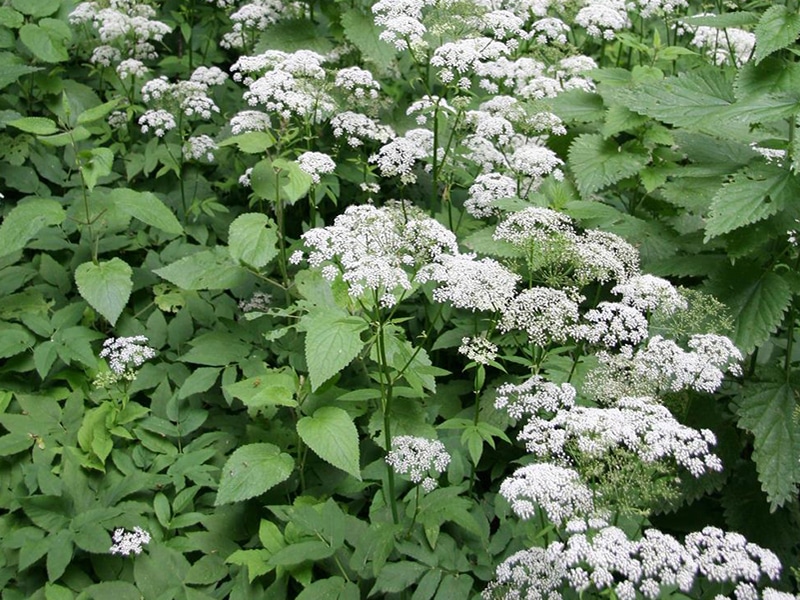
Goutweed
Aegopodium podagraria
Once planted as a shade-loving groundcover, goutweed (Aegopodium podagraria) also known as bishop’s weed or ground elder, spreads by rhizomes to quickly form dense patches. Goutweed displaces native species and inhibits the growth of conifers and other native trees. Persistence is required over several years to control its growth. For more information about controlling goutweed, click here for a fact sheet and watch this video.
On your way to Great Mountain Forest, you can see goutweed lining upper Windrow Road.
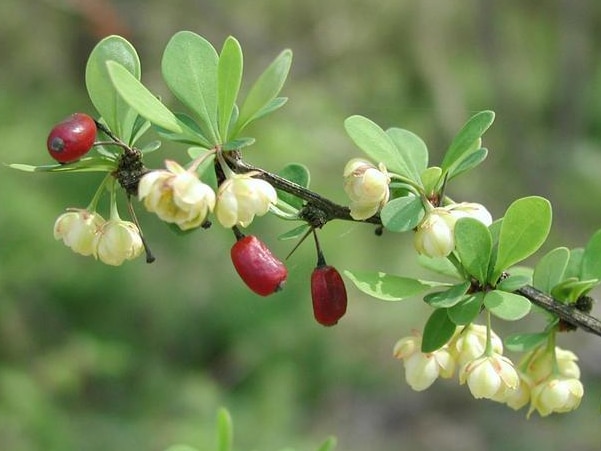
Japanese Barberry
Berberis thunbergii
Japanese barberry (Berberis thunbergii) is a thorny shrub invading our roadsides and woodlands to form dense prickly thickets that destroy native ecosystems. As a thorn-protected refuge for mice, it is also known to harbor black-legged ticks that spread Lyme disease. Deer avoid the spiny stems, so it is still planted for its deep red foliage and pearl-shaped red berries in the fall. Although not banned for sale until 2028, do not plant this shrub and consider replacing it with native choices. For information on removal, click here.
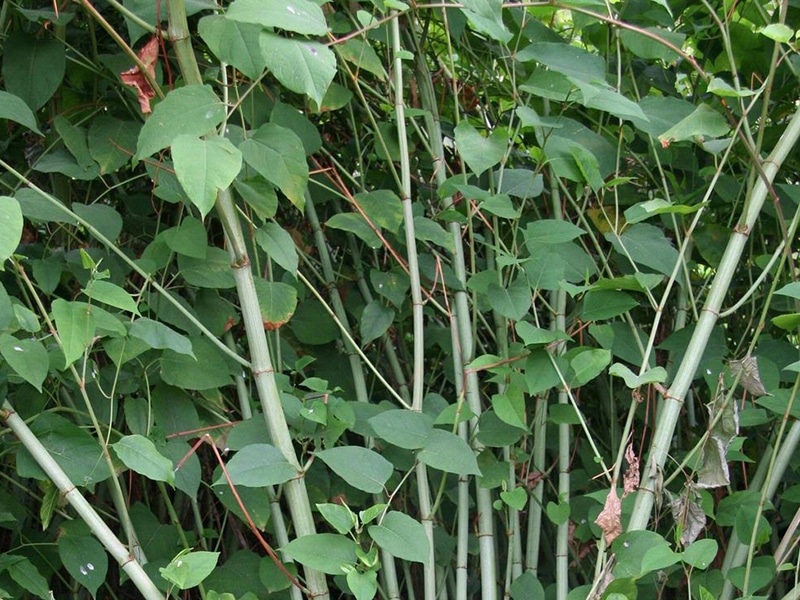
Japanese Knotweed
Reynoutria japonica
Japanese knotweed (Reynoutria japonica) is a tall, dense-growing shrub with upright, hollow bamboo-like stems. The heart-shaped green leaves vary in size and are arranged alternately on the stalk. In late August, creamy white clusters of flowers emerge and are soon covered with bees. Knotweed spreads aggressively through rapidly growing rhizomes and quickly forms a monoculture. Eradication of an established patch is extremely challenging, so early detection and rapid intervention are critical. Even a tiny fragment of this plant can regenerate, so mowing is not advised. For guidance from the University of Connecticut click here, and to watch a talk by forester Tom Zetterstrom, click here.
You can see stands of knotweed at the transfer station, on Route 44 heading west and along Mountain Road before the turn to Tobey Pond.
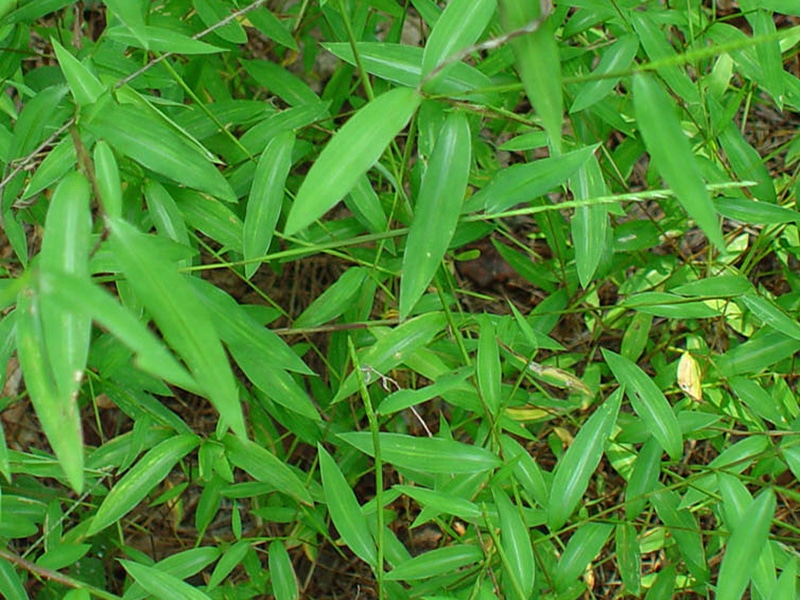
Japanese Stiltgrass
Microstegium vimineum
Japanese stiltgrass (Microstegium vimineum) is an annual grass from Asia that is one of the most destructive invasive species due to its rapid expansion into woodlands. Its slender stalks bear lance-shaped leaves with a silver midrib and flowers in late summer. Stalks bend and root, hastening its expansion. The shallow roots form a dense mat that outcompete native plants. Abundant tiny seeds are dispersed via contaminated gravel, soil and mulch, and by clinging to footwear, wildlife, tires and equipment. Early control of small infestations by hand pulling before the seed sets in August is critical to prevent its spread. Learn more about strategies here.
See Japanese stiltgrass along upper Lover’s Lane, on Ashpohtag and Bald Mountain Roads, and elsewhere.
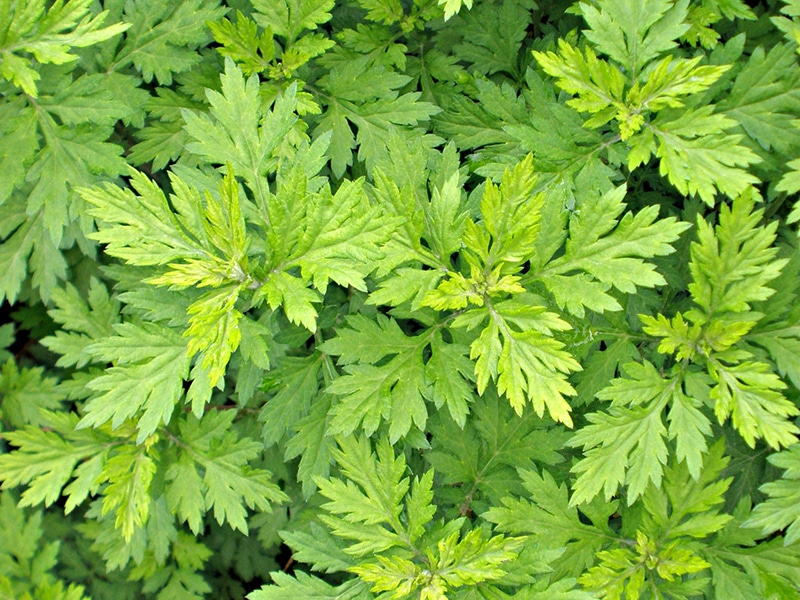
Mugwort
Artemisia vulgaris
Mugwort (Artemisia vulgaris) forms large, fast-spreading patches on roadsides and other disturbed areas. The gray-green foliage is slightly furry with leaves that are similar to those of Chrysanthemums. The plants can reach five or six feet tall and form a spire of flowers that change from cream to purplish late in the summer. Its rhizomes spread aggressively, displacing native species. Each plant is also capable of producing thousands of seeds. For this reason, it is critical to mow or cut the stems before the seeds set in early fall. Mugwort can regenerate from even tiny fragments of rhizome, so control is very difficult. Find more information about strategies here.
You can see this plant in many, many places in Norfolk.
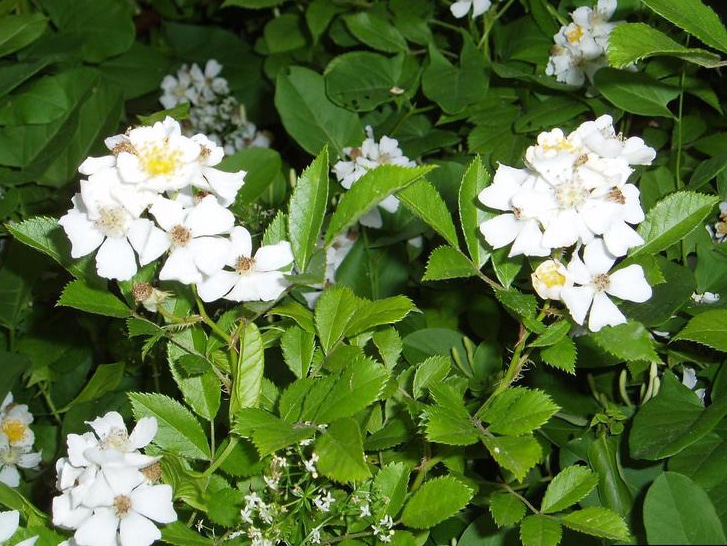
Multiflora Rose
Rosa multiflora
Multiflora rose (Rosa multiflora) is a dense thorny shrub, easily recognizable by the arching thorn covered stems reaching heights of eight feet or more. Clusters of white fragrant flowers cover the plant in May and June. Small berries form and ripen to a dark red later in the summer. Birds are the primary disperser of seeds, which remain viable for up to 20 years. Preferring sunny locations, this shrub rapidly takes over open fields, woodland edges and our roadsides. Be sure to wear protective clothing when tackling this shrub. For a fact sheet with the most effective control methods, click here.
You can see this plant in many Norfolk locations, including along the west side of Route 272 in South Norfolk.
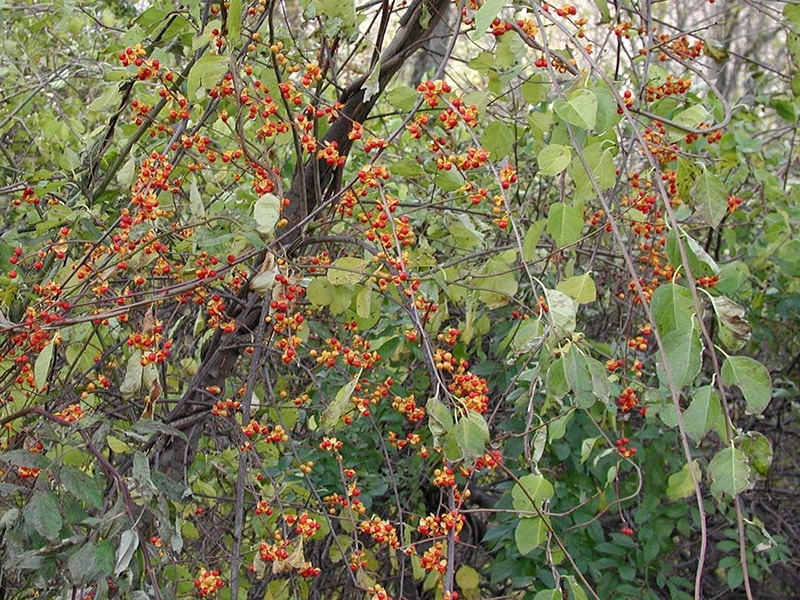
Oriental Bittersweet
Celastrus orbiculatus
Oriental bittersweet (Celastrus orbiculatus) is an aggressive woody vine with berries enclosed in an orangey-yellow covering that opens in the fall to reveal red-orange fruits. Its leaves turn yellow and the roots are bright orange. Bittersweet can climb as high as 50 feet and damage or even kill trees. To see University of Connecticut recommendations for the best ways to handle this vine, click here.
You can see this plant growing in Norfolk at the intersection of Smith and Old Goshen Roads, and elsewhere in South Norfolk.
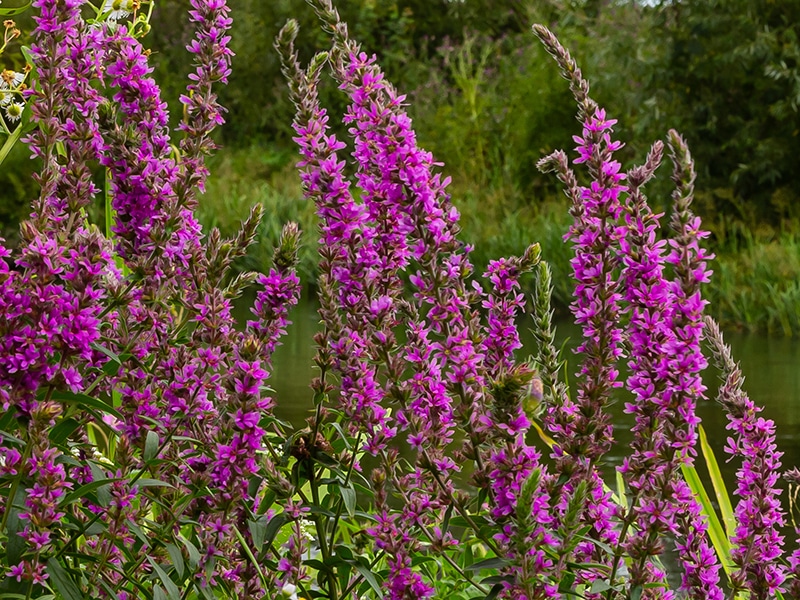
Purple Loosestrife
Lythrum salicaria
Purple loosestrife (Lythrum salicaria) is an erect perennial herb with multiple stems that grow three to ten feet tall. The woody stems are square-shaped and bear narrow, lance-shaped leaves. Showy deep pink to purple blossoms appear on long spikes from July through September. The plant produces abundant seeds that disperse easily and remain viable for many years. It also resprouts from broken stems, underground roots and plant fragments. It outcompetes native species and quickly forms dense stands, causing an overall decline in biodiversity. Species of beetles and weevils are approved biocontrols. Click here to learn more about this as well as other management strategies.
Thriving in moist locations, Lythrum’s splash of color is evident along West Side Road in late August.
Invasive Plant Resources
- Guide: How to Control the Top 10 Invasive Plants, a plant management calendar
- List: 100 invasive plants in Connecticut, from the Connecticut Invasive Plant Working Group
- List: Invasive plant brochure, a list of invasive plants and the natives to replace them
- Video: Protecting Biodiversity, a Zoom presentation on biodiversity conservation by herpetologist Hank Gruner, March 9, 2026 (Passcode: .d6jku^6)
- Video: The Invasive Plants in Our Forests, a video presentation
- Website: CIPWG, website for the Connecticut Invasive Plant Working Group
- Website: iNaturalist, website hosting a community of naturalists; offers a free phone app that will accurately identify plants, insects and animals
- Website: Invasive Plant Atlas, website with tools for identification, early detection, prevention and management of invasive plants, especially non-native invasive species affecting natural areas